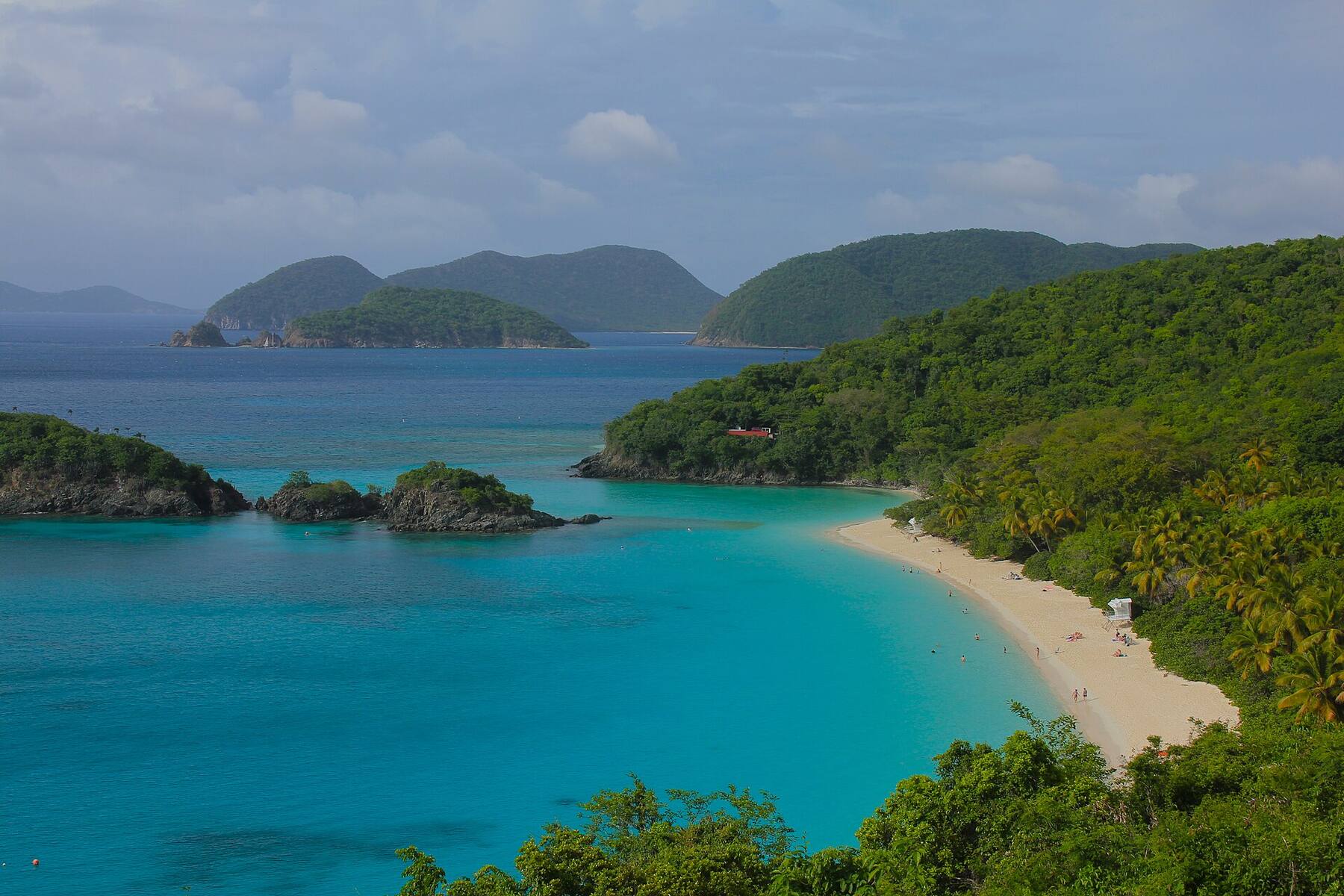
A short strip of sand at the head of Hawksnest Bay, the first beach right beside the North Shore Road out of Cruz Bay, in Virgin Islands National Park. Three small reefs of elkhorn coral run out from the beach, tall trees shade the sand, and the park's pavilions and grills sit a few steps behind the sand. Free, with no food and no rentals: bring what you need.
The north shore of St. John, U.S. Virgin Islands, on the North Shore Road (Route 20): the first beach the road runs beside out of Cruz Bay
The beach
About 600 feet (180 m) long and 15 to 40 feet wide, facing north-west into Hawksnest Bay, by the park's own survey (1974)
Run by
The National Park Service: Hawksnest is part of Virgin Islands National Park
Entry
Free: no gate and no fee, and the park is open 24 hours (Trunk Bay is the St. John beach that charges)
Facilities
Restrooms, changing rooms, picnic pavilions, tables and grills; no food, rentals, showers or lifeguards
The reef
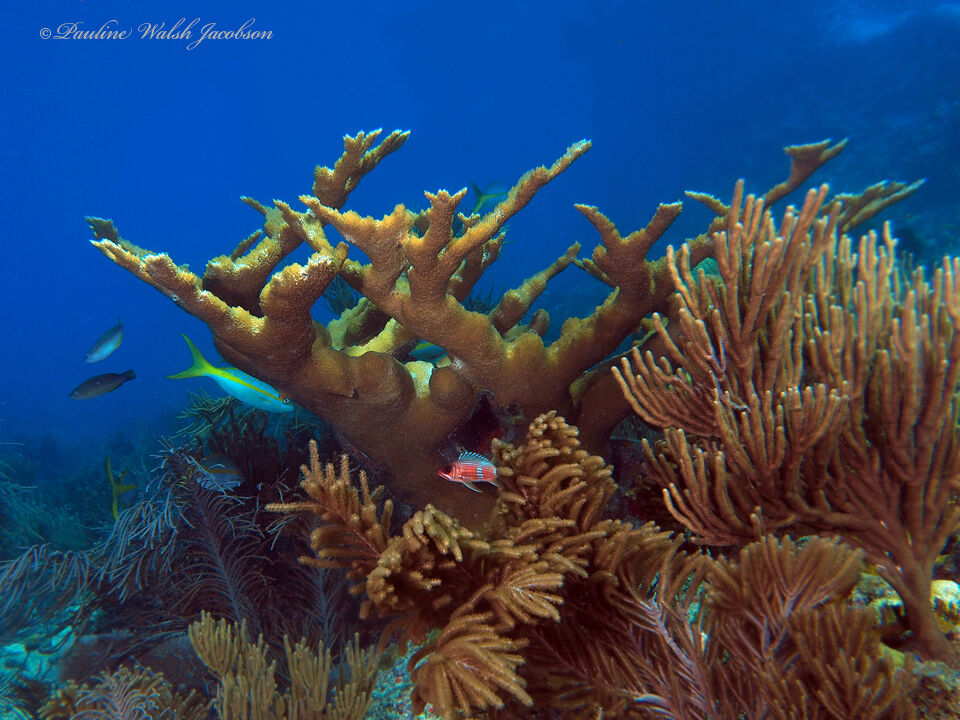
Three fingers of elkhorn coral running out from the shore — a threatened species, protected by federal law
Parking
A small lot beside the road, which often fills by mid-morning, the park says
Tour groups
For-fee groups of 12 or more may not come ashore here from boats, and need a permit to come by land
Next door
Gibney and Oppenheimer beaches, along the east side of the same bay
History
The park had built beach facilities here by 1962; today's pavilions and restrooms opened on February 12, 2005
Today
Is Hawksnest Beach good today?
Go Gentle water · Some cruise guests 10 am–3 pm. The best stretch left today is 3 pm–6 pm.
Day
The call
Why
Best time
Cruise guests here
Sea at the beach
Rain
Today
Go
Gentle water · Some cruise guests 10 am–3 pm
3 pm–6 pm
~150, 10 am–3 pm
Calm · 0.8 ft
10%
Tomorrow
Go
Glassy, snorkel-clear water · No cruise crowd today
10 am–1 pm
None
Calm · 0.6 ft
27%
Fri, Nov 27
Go
No cruise crowd today · Gentle water
12 pm–3 pm
None
Gentle · 1.1 ft
45%
Sat, Nov 28
Go
No cruise crowd today · Gentle water
8 am–11 am
None
Gentle · 1.3 ft
25%
Sun, Nov 29
Go
No cruise crowd today · Gentle water
3 pm–6 pm
None
Gentle · 1.1 ft
25%
The call is the same one our beach report makes, refreshed every half hour: the swell reaching the bay (Open-Meteo's marine forecast, read through our model of how open this shore is), the cruise passengers our crowd model puts on the sand, NOAA's sargassum satellite and the rain forecast. It is a model, not a lifeguard's report — and the park lists no lifeguards at Hawksnest, so look at the water yourself before you swim. The bars under each call are the hours from 8 am to 5 pm. Today's beach report
Taxi fares from the ferry and the hotels, the boat over from St. Thomas, the trail up Peace Hill, today's beach and weather reads and the island around it — each one opens the full page.
Hawksnest Bay from OpenStreetMap: the sand, the North Shore Road and the beach's parking lot, the houses along the east side, and Peace Hill on the ridge above Trunk Bay. The restrooms, changing rooms and pavilions sit between the lot and the sand; the three reefs run out from the middle of the beach. The Caneel Bay side of the bay, on the left, is closed to the public. Tap a pin for its section.
Getting there
How to get to Hawksnest Beach
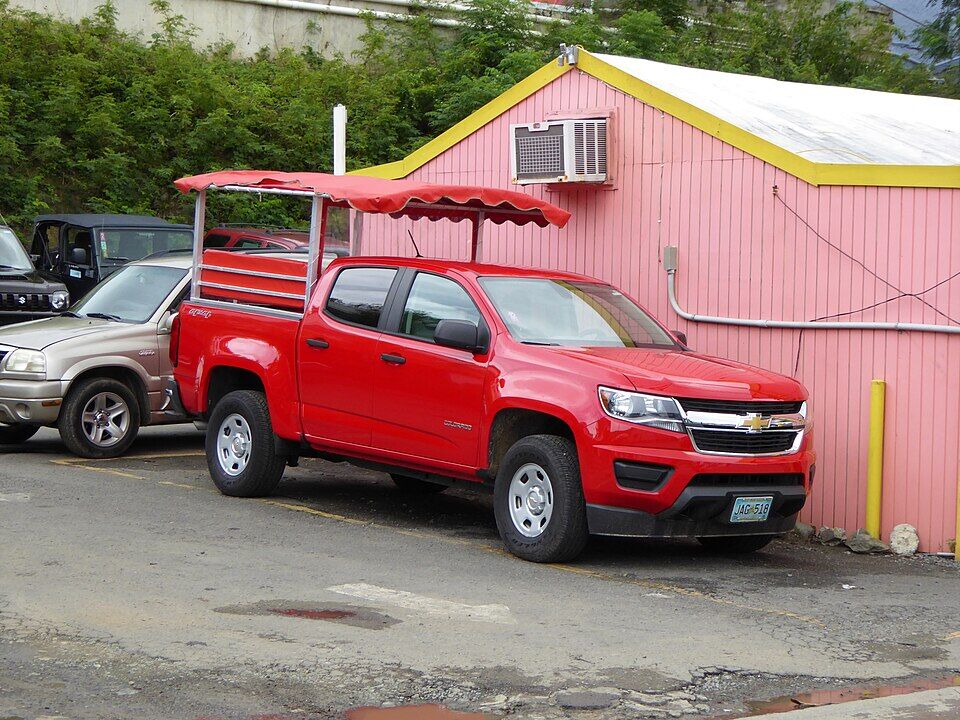
Hawksnest is on the North Shore Road (Route 20), the first beach the road runs right beside after it climbs out of Cruz Bay, where the ferries from St. Thomas land, and passes the entrance to Caneel Bay. St. John has no airport and no bus to the beaches: you come by ferry to Cruz Bay, then ride one of the open-air safari taxis that wait at the dock, or drive.
Taxis charge the official per-person fare in the table and stop at the beach's parking lot, right beside the road; from there it is a few steps through the trees to the sand. Driving, keep left — the road is steep and winding — and come early: the lot is small and often full by mid-morning, the park says.
A St. John safari taxi in Cruz Bay: a pickup with bench seats and a canopy on the back Photo: User:Mattes, CC BY 2.0 de
Per person, one way: fares set by the VI Taxicab Commission (rates revised October 24, 2022); night, luggage and waiting surcharges apply. Drive times are Google's for an ordinary day. Fare calculator for any two stops
Agree the fare before you set off — it is per person, one way — and agree a pick-up time for the ride back.
The park warns that valuables have been stolen from cars parked in the park: take them with you, or leave them in your room.
Phone signal on the north shore is patchy, the park warns; settle the ride back before you go down to the sand.
If the lot is full, Trunk and Cinnamon bays are a few minutes further along the same road.
Hawksnest is national park land: there is no gate, no entrance fee and no one at a booth, and the park is open 24 hours. The rules are the National Park Service's, set out in the 2026 Superintendent's Compendium for Virgin Islands National Park, and they apply on the sand, in the water and on the moorings.
What it costs
Beach entry
Free
Parking
Free
Pavilion event permit
$50 + costs
Dinghy tether
Free
A group using the pavilions for a party, a wedding or a gathering needs a park special use permit: the application fee is $50, non-refundable, the park may bill its costs on top, and it asks for ten business days. Virgin Islands National Park charges no entrance fee; Trunk Bay's $5 amenity fee is the only day fee on St. John's park beaches.
What is here, and when
The beach
Open 24 hours
Restrooms
No posted hours
Food and rentals
None
Showers
None listed
Lifeguards
None listed
The park's Hawksnest page lists accessible and family restrooms, vault or composting toilets, changing rooms, picnic pavilions, tables, grills, benches, a kayak launch and an information board, with accessible parking and paths to the water. It lists no showers, no food and no lifeguards. Beach access ramps can wash out in storms and big swells, the park warns.
What the park allows
✓Food, drinks and coolers — and alcohol — the park bans it only in visitor centers and on ranger programs
✓Cooking on the park's grills — or a portable grill; dead wood on the ground may be gathered for them
✕Glass bottles and containers — on every park beach
✕Pets on the beach — service animals excepted; leashed pets are allowed on the park's trails
✕Smoking or vaping — on the beach, or within 50 ft of the pavilions, picnic tables and restrooms
✕Balloons — anywhere in the park — turtles mistake them for jellyfish
✕Drones — unless the superintendent approves it in writing
✕Standing on or touching the coral — the elkhorn here is a federally threatened species
✕Boats, sailing, surfing or hook-and-line fishing — inside white NO BOATS buoys
✕Tour groups landing from boats — for-fee groups of 12 or more, off the park's beach
✕Taking shells, coral, plants or artifacts — federal park rules (36 CFR 2.1)
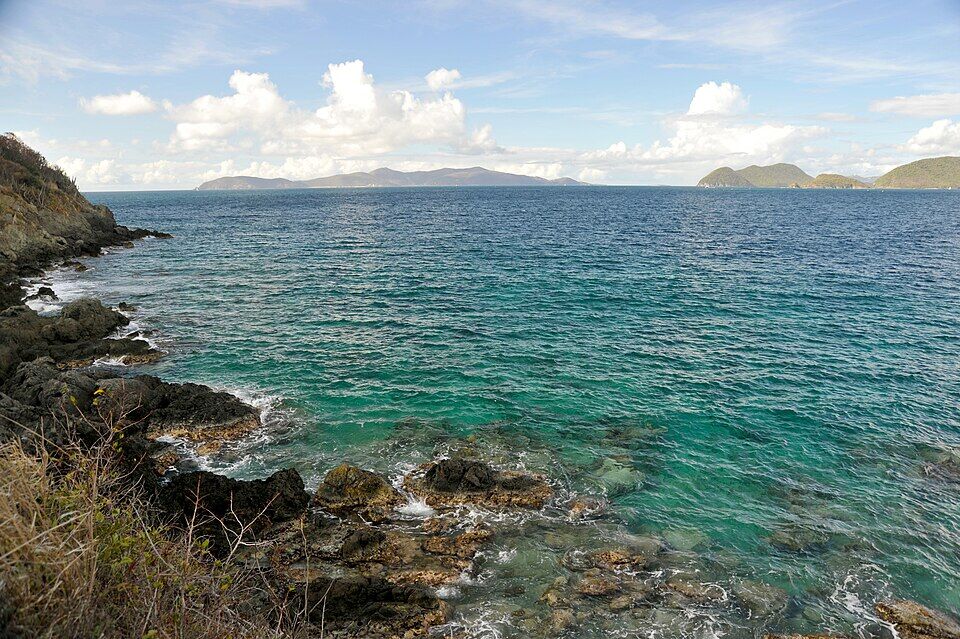
The rocky west shore of Hawksnest Bay, looking north out of the bay toward the British Virgin Islands — the way a winter north swell comes in (May 2009) Photo: Fred Hsu (Wikipedia:User:Fred Hsu on en.wikipedia), CC BY-SA 3.0
Everything sits between the parking lot by the road and the sand, a few steps apart, under tall trees: the restrooms and changing rooms, two picnic pavilions with tables, grills and benches. There is nothing to buy and nothing to rent. What the park lists, as of October 2026.
Facilities
Restrooms, changing rooms and pavilions
The park lists restrooms — an accessible one and a family one among them, with vault or composting toilets — changing rooms, two picnic pavilions, picnic tables, benches and grills, all under the trees behind the sand. The present buildings opened on February 12, 2005: four bathrooms, the changing rooms and the pavilions, with four tables each, all built to be accessible. The pavilions are first come, first served; a group using them for a party, a wedding or any organized event needs a park special use permit ($50 application fee). Fires only in the grills or a portable grill. The park lists no showers: rinse off at your hotel.
Three fingers of coral run straight out from the shore, dominated by elkhorn coral — a federally protected species, and fragile, the park says, with juvenile fish among its branches. Snorkel round the edges of the reefs, not over them: the water on top is shallow and dangerous, especially when the sea is up. Stand only on sand.
Parking
Parking
A small lot beside the North Shore Road, free, with wheelchair-accessible spaces. It is often full by mid-morning, the park says. Take your valuables with you: the park warns of thefts from cars parked in the park.
The park lists no lifeguards here. Inside the white NO BOATS buoys the park sets off its beaches, boats, sailing, surfing and hook-and-line fishing are banned. The bay opens north-west, so on most days the water is calm, but a winter north swell can break hard on the beach — the park's own survey in 1972–73 measured waves of up to six feet here. The reefs come almost to the sand: enter over the sandy patches.
Access
Wheelchair access
The park lists wheelchair-accessible parking, restrooms and changing rooms, and accessible paths and ramps to the water at Hawksnest — one of two St. John beaches it describes that way, with Trunk Bay. Ramps can wash out in storms and big swells, it warns; there are no beach wheelchairs here (Trunk Bay has them).
A dinghy tether — two round green buoys joined by a floating line — is for boats 16 feet long or less. Boats of 60 feet or less must use the park's moorings rather than anchor, and the park has set one of its purple moorings, for boats of 61 to 100 feet, in Hawksnest Bay. For-fee tour groups of 12 or more may not land on the park's beach from any commercial boat, so the day-sail crowds go elsewhere.
Taxis stop at the parking lot by the road. The fare back to Cruz Bay is the same official per-person fare as the way out; agree a pick-up time with your driver before you go down to the sand, since the phone signal on the north shore is patchy.
The three reefs start at the water's edge, so this is a snorkel you can do from the sand. Swim along the sides of each finger rather than over the top, where it is shallow: the park points to the juvenile fish in and among the elkhorn's branches. Go in the morning, before the afternoon trade wind ruffles the water, and on a calm day.
The park calls Hawksnest a great family beach, and when the pavilions opened in 2005 its spokeswoman called it 'a locals beach'. Bring everything — there is no shop — and come early for a table or a grill. No glass, no balloons, and fires only in the grills.
Along the east side of the same bay: Gibney Beach, where the Gibney family settled in 1950, and at its far end the beach by the house J. Robert Oppenheimer built, which his family later deeded to the people of St. John. The Trust for Public Land bought part of the Gibney beachfront for the park in 1999. The Oppenheimer beach house is a Virgin Islands government facility, being rehabilitated as of February 2025.
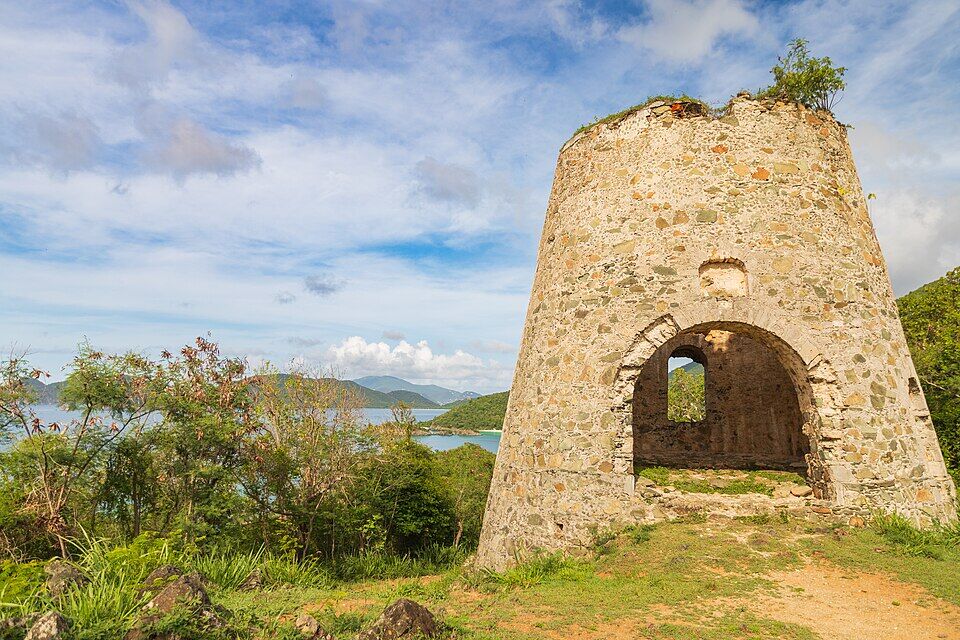
Less than a mile past Hawksnest on the North Shore Road, a short path climbs from a small parking area to the stone tower of the Denis Bay plantation's windmill, with views over Hawksnest Bay and the north-shore bays. Our trail page puts it at under a tenth of a mile — a five-minute climb.
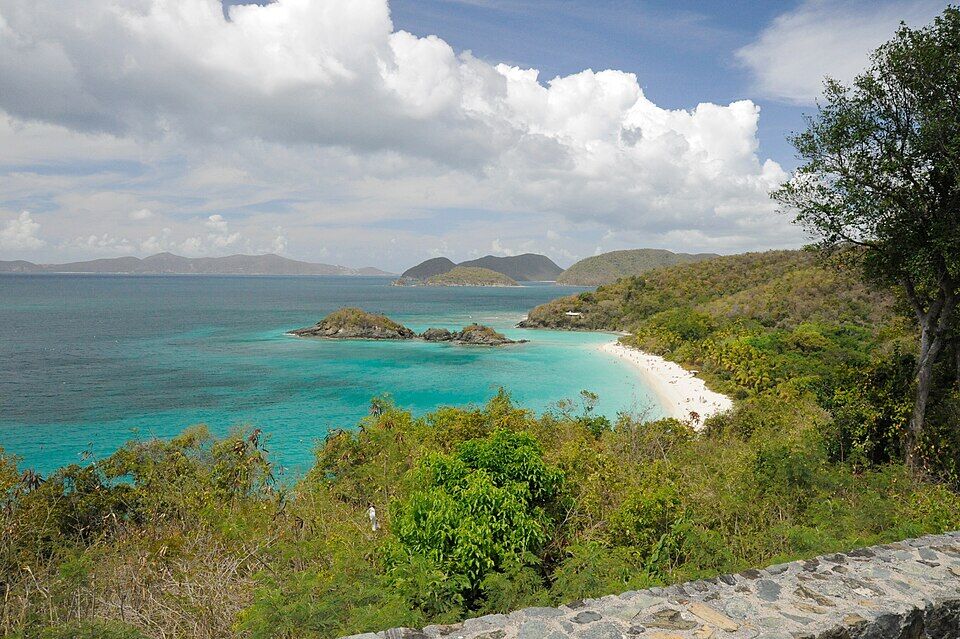
Over Peace Hill to the east is Trunk Bay, the park's most famous beach, with the underwater snorkel trail round Trunk Cay, showers, a snack bar and rentals — and a $5 fee, the only one on St. John's park beaches. Come to Hawksnest for the quiet, go to Trunk for the trail.
West of Hawksnest, round the Caneel Bay peninsula, Honeymoon Beach has chairs, food and rentals at its beach club. It is not reached along the shore from here: walk the Lind Point Trail from Cruz Bay or take the beach club's shuttle from the Caneel Bay gate.
There is nothing to eat or drink for sale at Hawksnest: no snack bar, no food truck, no shop. Bring a cooler — food, drinks and alcohol are allowed, glass is not — and use the park's grills and pavilion tables.
The nearest food is back in Cruz Bay, a few minutes along the road, where most of the island eats and drinks. Trunk Bay, the next beach east, has the park's Snack Shack and bar, open 10 am to 4 pm.
Bring your ownFood, drinks and coolers are welcome; glass is not. The park lists picnic tables, pavilions and grills.
Along the North Shore Road
Cruz BayThe island's restaurants, delis and bars, back by the ferry dock — the St. John guide lists them.
Trunk Bay Snack Shack and barSnacks, coffee, ice cream and drinks including alcohol, 10 am–4 pm, the park says; Trunk Bay's $5 fee applies.
Weather & sea
Hawksnest Beach weather and the best time to go
Warm all year: highs in the mid-80s °F, a steady easterly trade wind, and short tropical showers rather than all-day rain. December to April is the dry, busy season; June to November is hurricane season, with the peak from mid-August to mid-October.
Hawksnest Bay opens to the north-west, so the easterly trade-wind swell mostly passes it by and the water is calm on most days. Winter is the exception: swells from storms far out in the North Atlantic run into the north-shore bays, and the park's year-long survey in 1972–73 measured waves of up to six feet breaking here. On those days the reefs right off the sand make getting in and out hard. The call at the top of the page reads the swell every half hour.
The next 7 days on St. John
Day
Sky
High / low
Rain
Wind
Seas offshore
Today
Drizzle
84° / 80°F
27%
E 21 mph, gusts 27
4.1 ft
Tomorrow
Drizzle
84° / 81°F
41%
E 21 mph, gusts 28
4.3 ft
Fri, Nov 27
Drizzle
84° / 81°F
45%
E 22 mph, gusts 30
4.7 ft
Sat, Nov 28
Partly cloudy
84° / 82°F
31%
E 19 mph, gusts 25
4.2 ft
Sun, Nov 29
Drizzle
84° / 81°F
34%
E 25 mph, gusts 32
4.7 ft
Mon, Nov 30
Drizzle
83° / 79°F
49%
E 25 mph, gusts 33
5.2 ft
Tue, Dec 1
Drizzle
84° / 81°F
47%
E 21 mph, gusts 31
5.1 ft
Open-Meteo forecast for St. John, refreshed every half hour. The seas are offshore; how much of it reaches the sand is the call above. NWS alerts & marine forecast · North swell season
Sea temperature by month
80°Jan
80°Feb
80°Mar
81°Apr
83°May
85°Jun
85°Jul
85°Aug
86°Sep
86°Oct
84°Nov
82°Dec
Daily-mean sea-surface temperature off St. John, averaged 2021–2024 (Open-Meteo marine reanalysis): warmest in Sep (86.3°F), coolest in Feb (79.7°F).
Cruise crowds
Cruise ships and the crowd at Hawksnest Beach
No cruise ship docks at St. John. Small ships — expedition ships, sailing yachts and small luxury vessels — anchor off Cruz Bay and tender their guests ashore, so a ship day here is a few hundred people, not a few thousand. The excursions that ferry over from the big ships in Charlotte Amalie are counted at Trunk Bay, one of only three places the park allows land-based tour groups: for-fee groups of 12 or more may come to Hawksnest only with a permit by land, and not at all from a commercial boat.
13 of the next 31 days have a ship in off Cruz Bay. The busiest at Hawksnest Beach, by our model:
Wed, Nov 25 — 1 ship, 1,473 guests in port. Some crowd: ~150 expected here, 10 am–3 pm
Fri, Dec 4 — 1 ship, 388 guests in port. Quiet: ~40 expected here
Wed, Dec 9 — 1 ship, 1,473 guests in port. Some crowd: ~150 expected here, 11 am–4 pm
Mon, Dec 14 — 3 ships, 524 guests in port. Quiet: ~40 expected here
Tue, Dec 15 — 1 ship, 556 guests in port. Quiet: ~60 expected here
Wed, Dec 16 — 1 ship, 922 guests in port. Quiet: ~100 expected here
Our crowd model, not a head count: it puts about 10% of the guests of each small ship anchored off Cruz Bay on Hawksnest, the first beach along the road, starting about 75 minutes after the ship arrives and gone 90 minutes before it sails; past 600 on the sand we call it packed. The same model makes the call at the top of the page and on our beach report.
No — there is no public live webcam at Hawksnest that we can embed, and we would rather say so than show a still photo dressed up as live. The nearest camera that looks at the north-shore sea is at Windswept Point, over Cinnamon, Maho and Francis Bays a few bays east along the same road: calm water there usually means calm water here.
On Oxholm's survey of St. John the land round the bay belongs to sugar estates: Klein Caneel Bay on the ridge running out to Hawksnest Point, Susannaberg on the hill about 800 yards south-east, and a works with a treadmill between Hawksnest and Trunk bays, at Denis Bay. A road runs out to the point; nothing is built on it.
1950
The Gibneys' beach
Robert and Nancy Gibney buy land along the east side of the bay — the beach 'then known as Hawksnest Beach' — from its absentee owner, Herbert Stevens of Boston, and build a house of stones from the site. A small piece of their land is later sold to J. Robert Oppenheimer, who builds a house near the shore.
August 2 and December 1, 1956
A national park
Congress authorizes Virgin Islands National Park; on December 1 Laurance Rockefeller hands the deeds to 5,086 acres of St. John to the Secretary of the Interior in Cruz Bay.
1962
Beach facilities
The park's brochure lists the beach facilities at Hawksnest among the accomplishments of the Mission 66 building program, mentions a small campground at Hawksnest Bay, and names Hawksnest Beach first among the places where 'snorkeling is excellent'.
1972–1973
The beach measured
A park study of the north-shore beaches measures Hawksnest at 600 feet long and 15 to 40 feet wide — carbonate sand at the east end, beach rock and cobbles along the western 150 feet — with waves of up to six feet in a year.
1999
Gibney beachfront to the park
The Trust for Public Land buys Eleanor Gibney's three-acre beachfront on Hawksnest Bay and transfers it to the National Park Service.
February 12, 2005
New pavilions and restrooms
The park opens the present facilities, built over 18 months for about $300,000: four bathrooms, changing rooms and two picnic pavilions, all accessible. 'It's a locals beach,' the park's spokeswoman says.
May 9, 2006
Elkhorn coral protected
NOAA lists elkhorn coral, the coral of Hawksnest's three reefs, as threatened under the Endangered Species Act.
November 13, 2017
Reopened after Irma and Maria
Two months after the hurricanes the park reopens Hawksnest, having cut trees, cleared the access and removed about 200 cubic yards of debris; divers clear the water off the park's beach, while the eastern part stays closed until its debris is removed.
October 2019
Dead trees cleared
Park crews remove loose dead trees and branches from the north-shore beaches, Hawksnest among them, before the swell can carry them onto the reef, leaving everything green and rooted in place.
February 2025
The Oppenheimer beach house
The Virgin Islands Department of Sports, Parks and Recreation reports work under way on the Oppenheimer beach facility, with a $1 million Economic Development Authority grant, and a senator proposes renaming it.
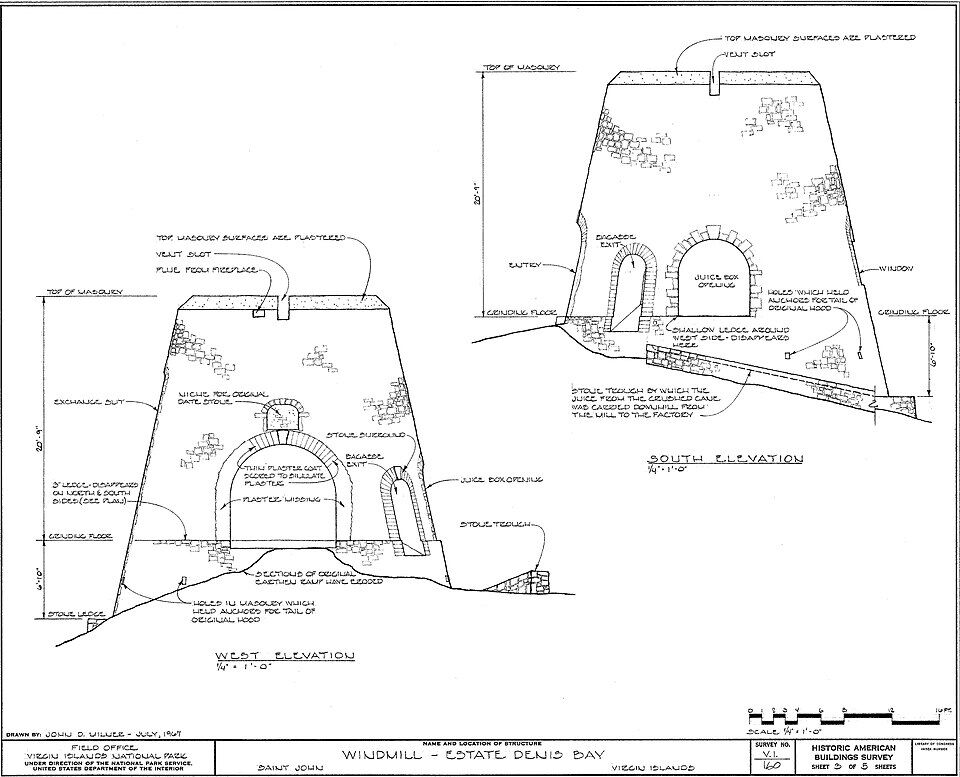
The windmill of Estate Denis Bay — the tower on Peace Hill — as the Historic American Buildings Survey drew it in July 1967: its west and south sides Photo: John Milner for HABS, Public domain
The parking lot is small and often full by mid-morning, the park says. Come early, or come by taxi and leave the parking to someone else.
Around the reefs, not over them
The park's advice: snorkel the edges of the three reefs, not the shallow water on top, which is dangerous when the sea is up. Stand only on sand — the elkhorn coral is a protected species.
Reef-safe sunscreen is the law
The U.S. Virgin Islands ban sunscreens with oxybenzone, octinoxate or octocrylene, and the park asks for reef-safe ones. Bring a mineral (zinc or titanium) one, or a rash guard.
Bring everything
There is no shop, snack bar or rental stand. Pack water, lunch, snorkel gear and shade; charcoal if you mean to use the grills.
No glass, no balloons, no dogs
Glass is banned on every park beach, balloons anywhere in the park, and pets on the beaches — leashed dogs may use the park's trails.
Watch the winter swell
From about November to March a north swell can break hard on the beach for a day or two, with the reefs right behind the break. The call at the top of the page reads the swell every half hour.
No. Virgin Islands National Park charges no entrance fee, Hawksnest has no gate, and parking is free. The only cost is a $50 special use permit if a group wants the pavilions for a party or an event. Trunk Bay is the St. John beach that charges, $5 a person aged 16 and up.
How do you get to Hawksnest Beach from Cruz Bay?
By safari taxi or rental car along the North Shore Road (Route 20) — about 6 minutes (3.3 km) by road from the ferry dock; it is the first beach right beside the road. The official taxi fare from Cruz Bay is $9 for one rider, $8 each for two or more. There is no bus to the north-shore beaches.
How much is a taxi to Hawksnest?
Taxis charge fixed per-person fares set by the VI Taxicab Commission. From the Cruz Bay ferry dock it is $9 for one rider, $8 each for two or more; from Caneel Bay $8 for one rider, $6 each for two or more; from the Westin $12 for one rider, $10 each for two or more; from Coral Bay $20 for one rider, $14 each for two or more. Night, luggage and waiting surcharges apply.
Is Hawksnest Beach good for snorkeling?
Yes, for snorkelers who keep off the coral: three small reefs of elkhorn coral run straight out from the beach, with lots of small and juvenile fish among the branches, the park says. Snorkel around the edges of the reefs, not over their shallow tops, and go on a calm day. There are no rentals, so bring your own gear.
Is there parking at Hawksnest Beach?
Yes, a small free lot beside the North Shore Road, with wheelchair-accessible spaces. The park says it is limited and often fills by mid-morning, so come early, or take a taxi.
Does Hawksnest have restrooms and showers?
It has restrooms — including accessible and family ones — and changing rooms behind the beach, the park lists, along with picnic pavilions, tables and grills. It lists no showers. Trunk Bay, the next beach east, has showers inside its $5 amenity fee.
Are there lifeguards at Hawksnest?
No lifeguards are listed at Hawksnest. The water is calm most days, but winter north swells can break hard on the beach with the reefs close behind. Swim with someone, and enter over sand.
Is there food at Hawksnest Beach?
No. There is no snack bar, shop or rental stand. Bring food, drinks and a cooler — alcohol is allowed, glass is not — and use the park's grills and pavilion tables. The nearest food is in Cruz Bay, or Trunk Bay's Snack Shack, 10 am to 4 pm.
Can you reserve a pavilion at Hawksnest?
The pavilions are first come, first served. A group using them for a party, a wedding or another organized event needs a special use permit from the park: the application fee is $50, non-refundable, the park may bill its costs on top, and it asks for at least ten business days.
Are dogs allowed at Hawksnest Beach?
Not on the beach: pets are prohibited on Virgin Islands National Park beaches. Service animals are allowed, and leashed dogs may use the park's trails.
Is Hawksnest a good beach for kids?
The park calls it a great family beach: calm on most days, shaded by tall trees, with pavilions, grills and restrooms a few steps from the sand. Mind the reefs, which start right at the water's edge, and the absence of lifeguards.
What is the difference between Hawksnest, Gibney and Oppenheimer beaches?
They share Hawksnest Bay. Hawksnest Beach is the park beach at the head of the bay, by the road, with the parking lot and facilities. Gibney Beach runs along the east side, where the Gibney family settled in 1950 — part of its beachfront was bought for the park in 1999 — and Oppenheimer Beach is at its far end, by the house J. Robert Oppenheimer built, now a Virgin Islands government facility.
Is there a Hawksnest Beach webcam?
No public live stream we can embed. The nearest live camera on the north shore is at Cinnamon Bay, a few bays east, and it is a good read on whether the north-shore sea is calm.
Photo & map credits
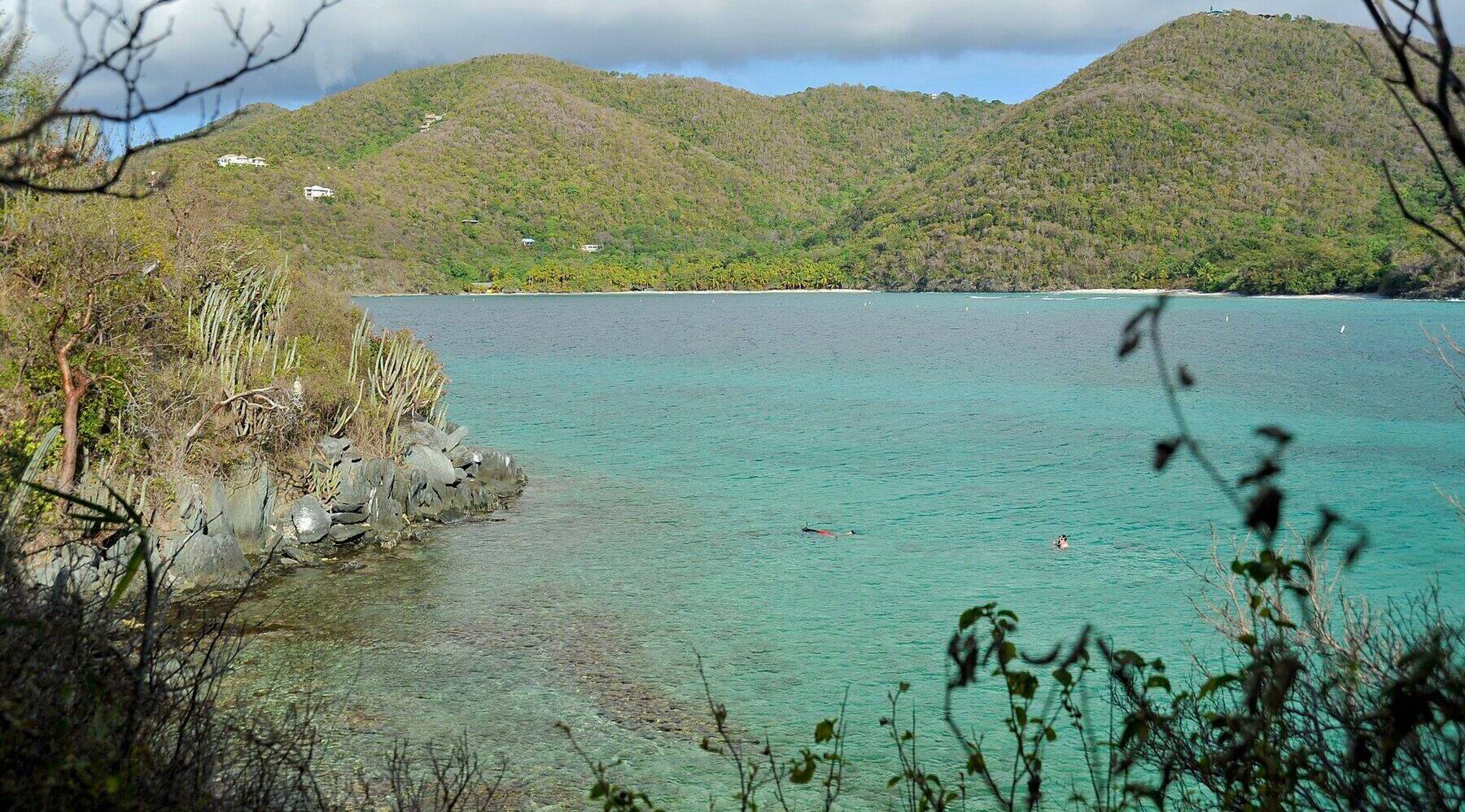
Hawksnest Bay from the rocks on its west shore in May 2009, looking across to the sand at the head of the bay, where Hawksnest Beach is; two snorkelers over the reef in the foreground — Fred Hsu (Wikipedia:User:Fred Hsu on en.wikipedia), CC BY-SA 3.0, via Wikimedia Commons (cropped and resized).
The rocky west shore of Hawksnest Bay, looking north out of the bay toward the British Virgin Islands — the way a winter north swell comes in (May 2009) — Fred Hsu (Wikipedia:User:Fred Hsu on en.wikipedia), CC BY-SA 3.0, via Wikimedia Commons (resized).
Elkhorn coral, the coral of Hawksnest's three reefs, with sea rods and a squirrelfish; photographed elsewhere off St. John, not at Hawksnest (2017) — Pauline Walsh Jacobson, CC BY 4.0, via Wikimedia Commons (resized).
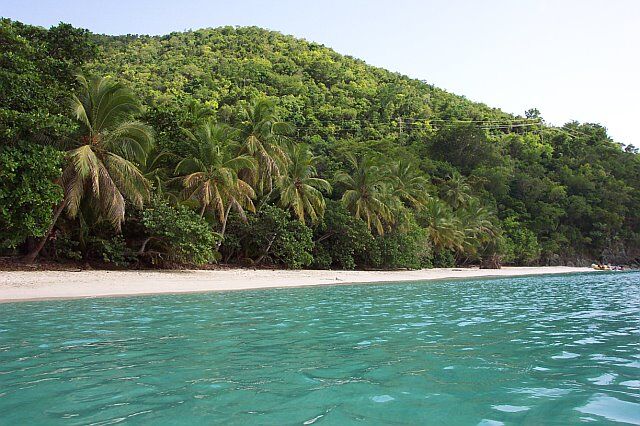
Gibney Beach, along the east side of Hawksnest Bay, from the water: sand under coconut palms and the forested hill above — Mdst101 at en.wikipedia, CC BY-SA 3.0, via Wikimedia Commons (resized).
The stone windmill tower on Peace Hill, above the east side of Hawksnest Bay, with the north-shore bays behind (August 2023) — Madlabscientist, CC BY-SA 4.0, via Wikimedia Commons (resized).
The windmill of Estate Denis Bay — the tower on Peace Hill — as the Historic American Buildings Survey drew it in July 1967: its west and south sides — John Milner for HABS, Public domain, via Wikimedia Commons (resized).
A St. John safari taxi in Cruz Bay: a pickup with bench seats and a canopy on the back — User:Mattes, CC BY 2.0 de, via Wikimedia Commons (resized).
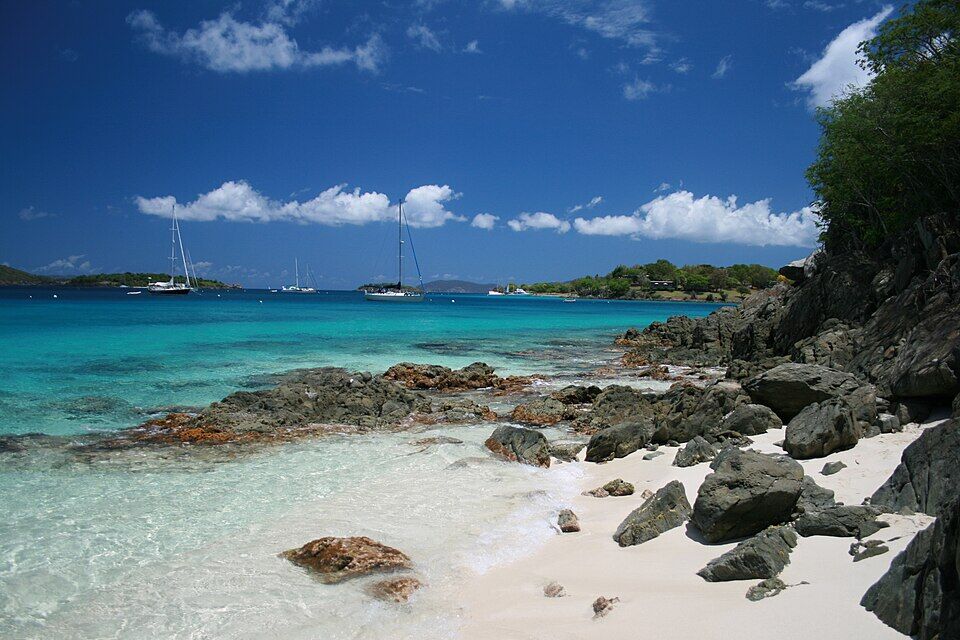
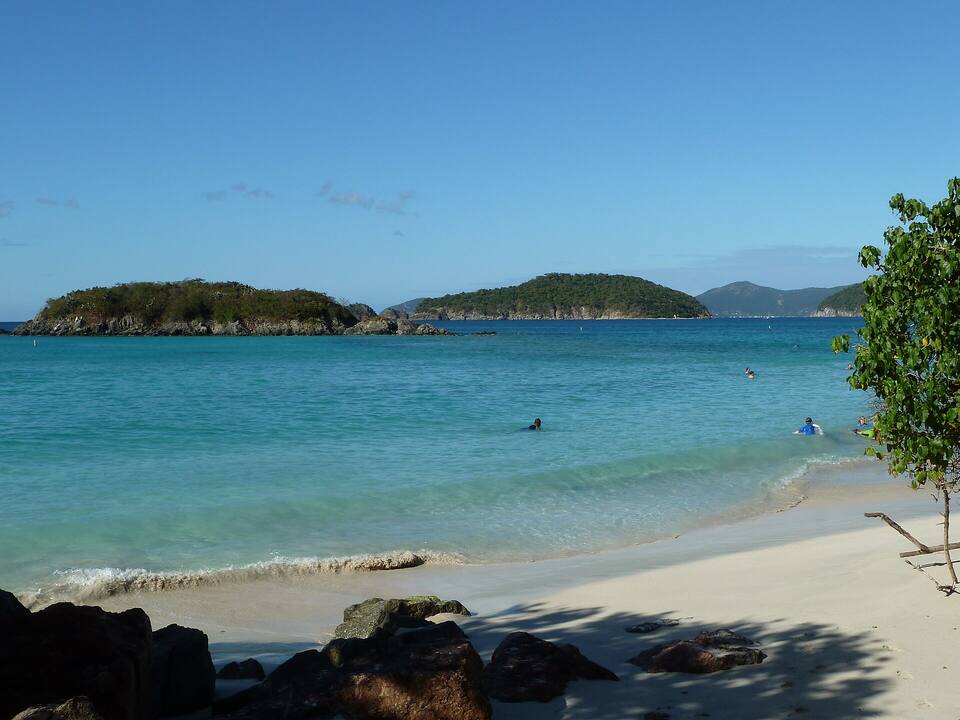
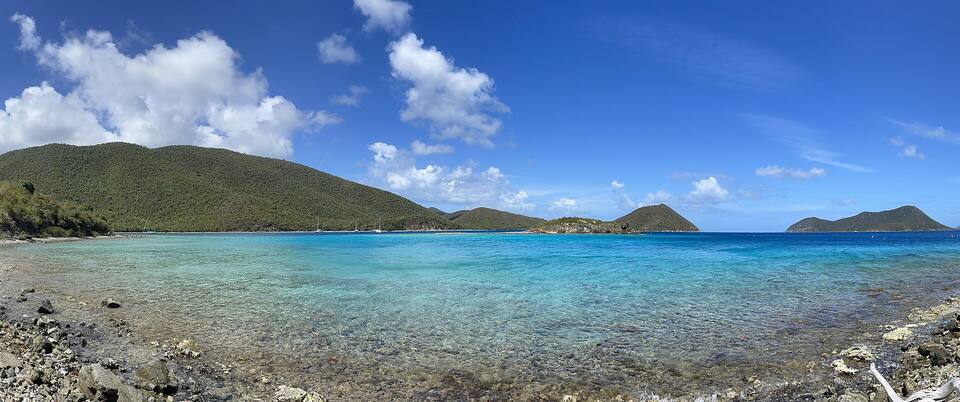
Honeymoon Beach on Salomon Bay, west of Hawksnest round the Caneel Bay peninsula: rocks, sand and sailboats on moorings — Bradley Furlow, CC BY-SA 4.0, via Wikimedia Commons (resized).
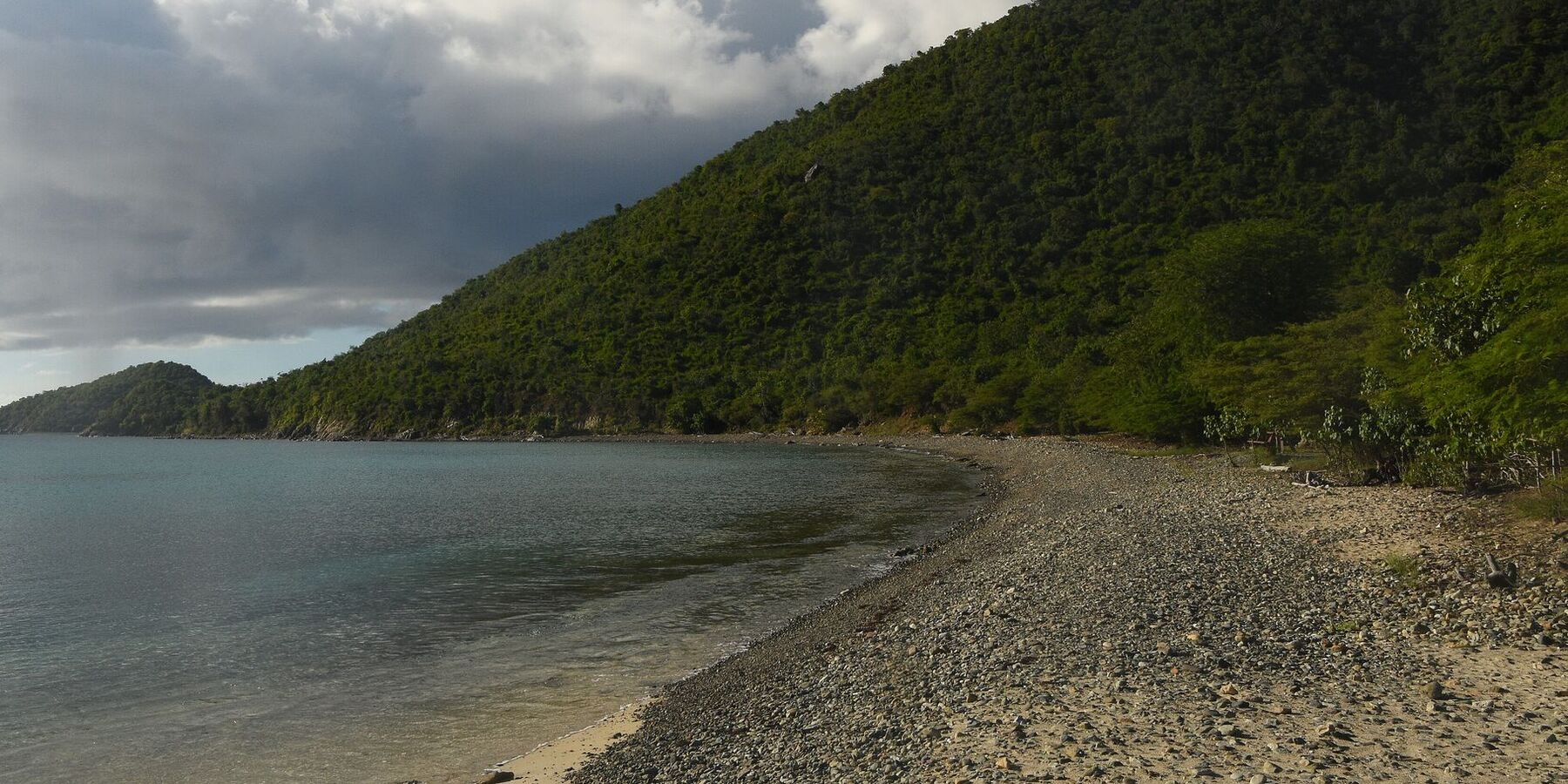
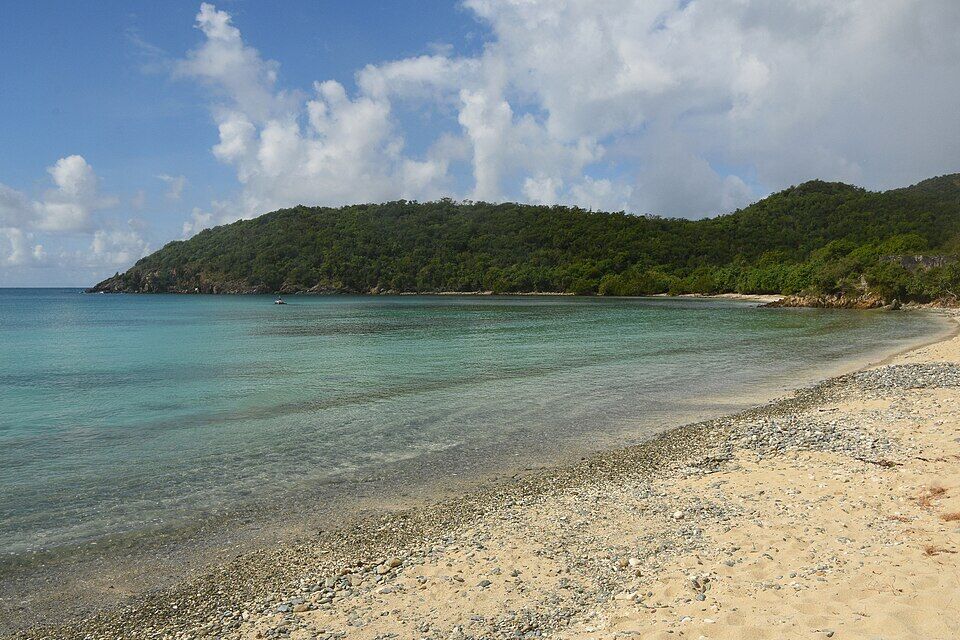
Little Lameshur Bay on St. John's south shore: sand and pebbles under the forest (October 2022) — Amaury Laporte, CC BY 2.0, via Wikimedia Commons (resized).
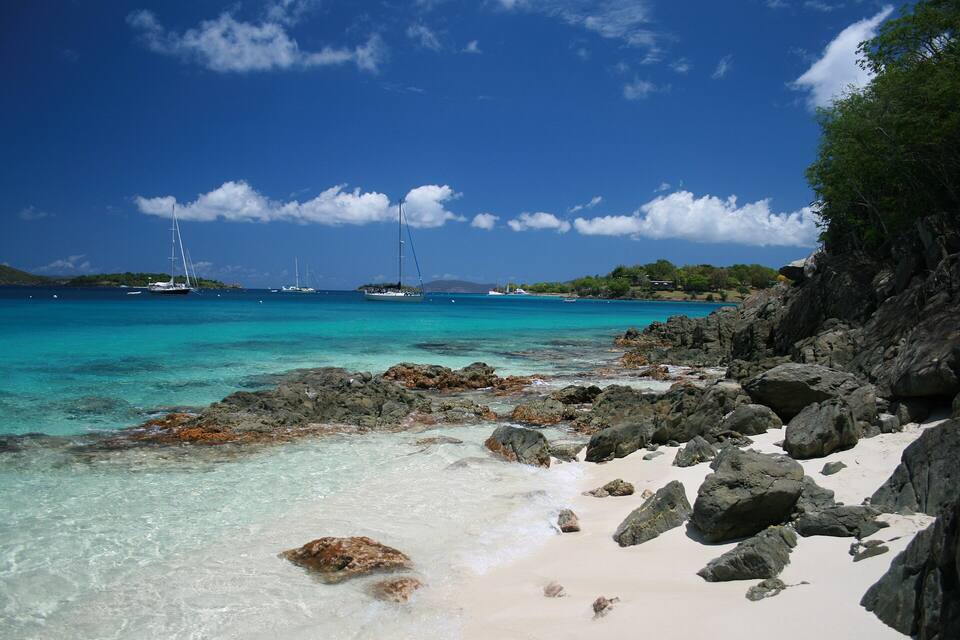
Honeymoon Beach on Salomon Bay, St. John — Bradley Furlow, CC BY-SA 4.0, via Wikimedia Commons (resized).
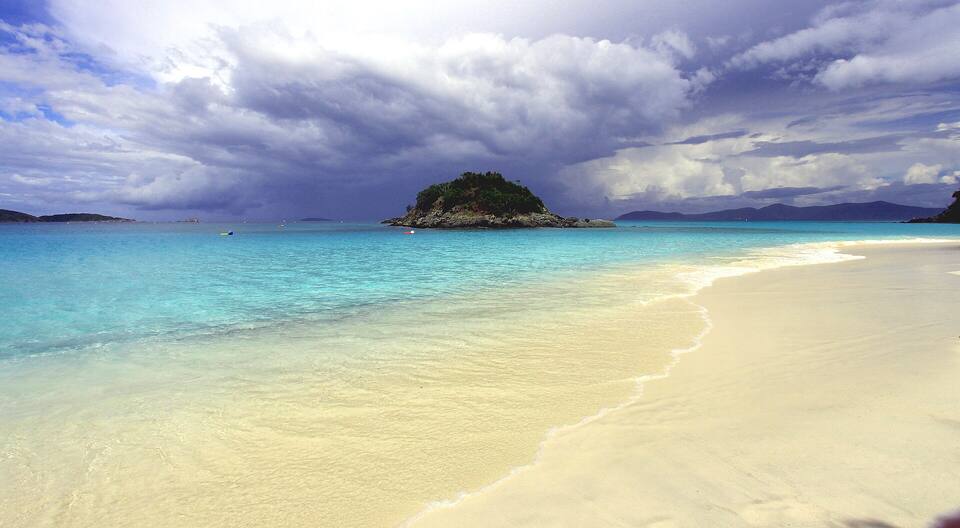
The beach at Trunk Bay with Trunk Cay offshore — Prayitno, CC BY 2.0, via Wikimedia Commons (resized).
Cinnamon Bay with Cinnamon Cay and Whistling Cay offshore — Gruepig, CC BY-SA 4.0, via Wikimedia Commons (resized).
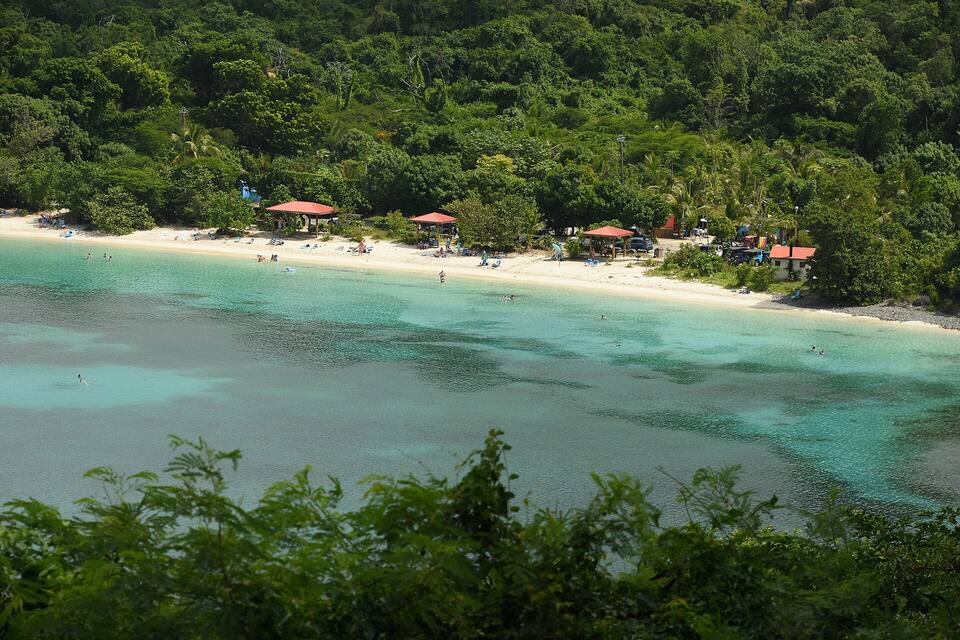
Maho Bay from the hillside: a long curve of sand under the forest — Amaury Laporte, CC BY 2.0, via Wikimedia Commons (resized).
Francis Bay beach in October 2022, looking north along the shore to the wooded slopes of Mary Point — Amaury Laporte, CC BY 2.0, via Wikimedia Commons (cropped and resized).
Leinster Bay and Waterlemon Cay from the Leinster Bay Trail — Eoghanacht, CC0, via Wikimedia Commons (resized).
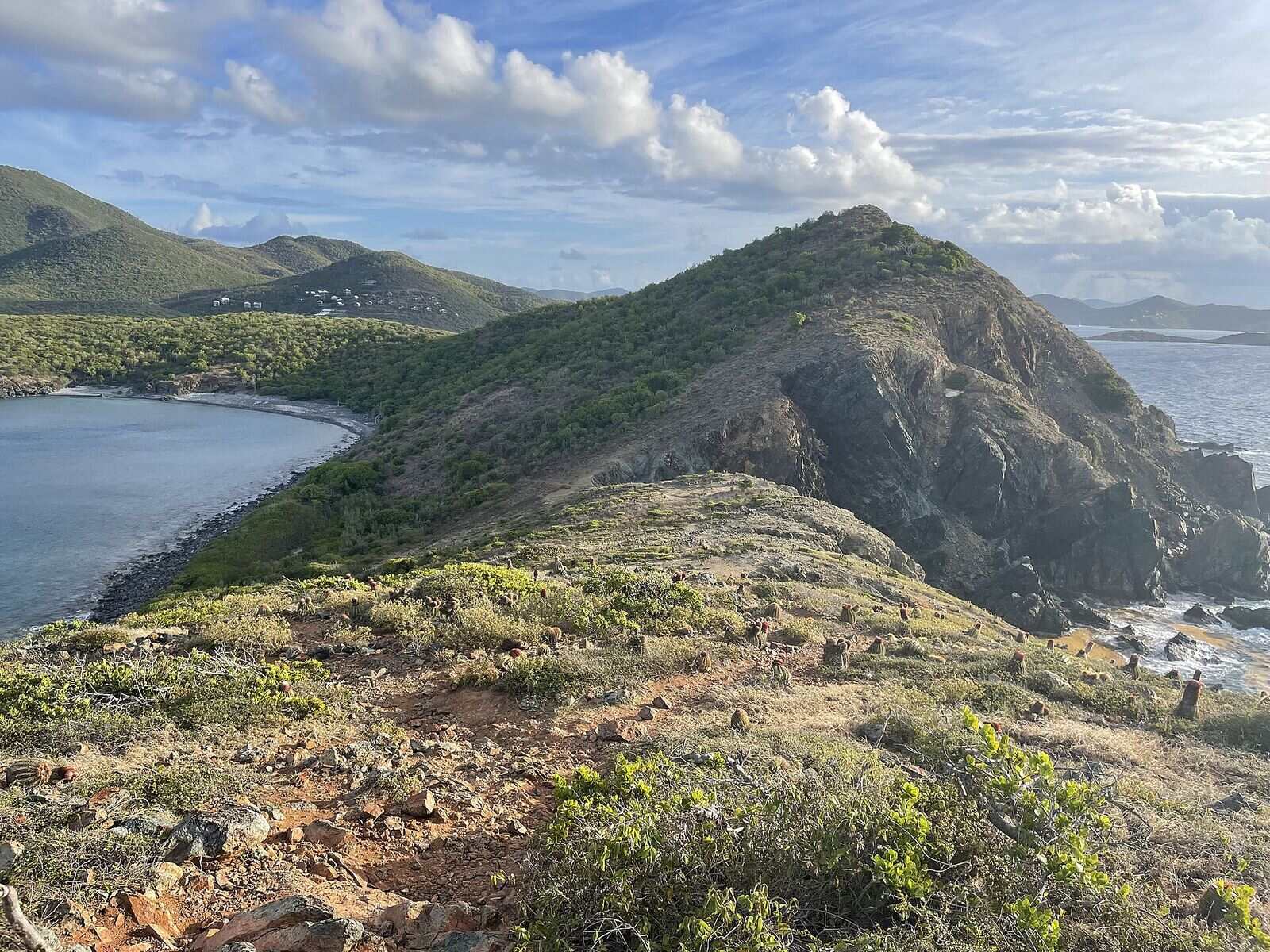
Salt Pond Bay from the Ram Head Trail in April 2022: the bay on the left, with the beach at its head and the cobbles of Blue Cobblestone Beach nearer, the ridge of the Ram Head peninsula, and houses on the hill above — Eoghanacht, CC0, via Wikimedia Commons (resized).
 Go today
 Good today
 Go today
 Go today
 Go today
 Good today
 Skip today today
 Think twice today